When to Choose an AI Chatbot Development Company for Your Business

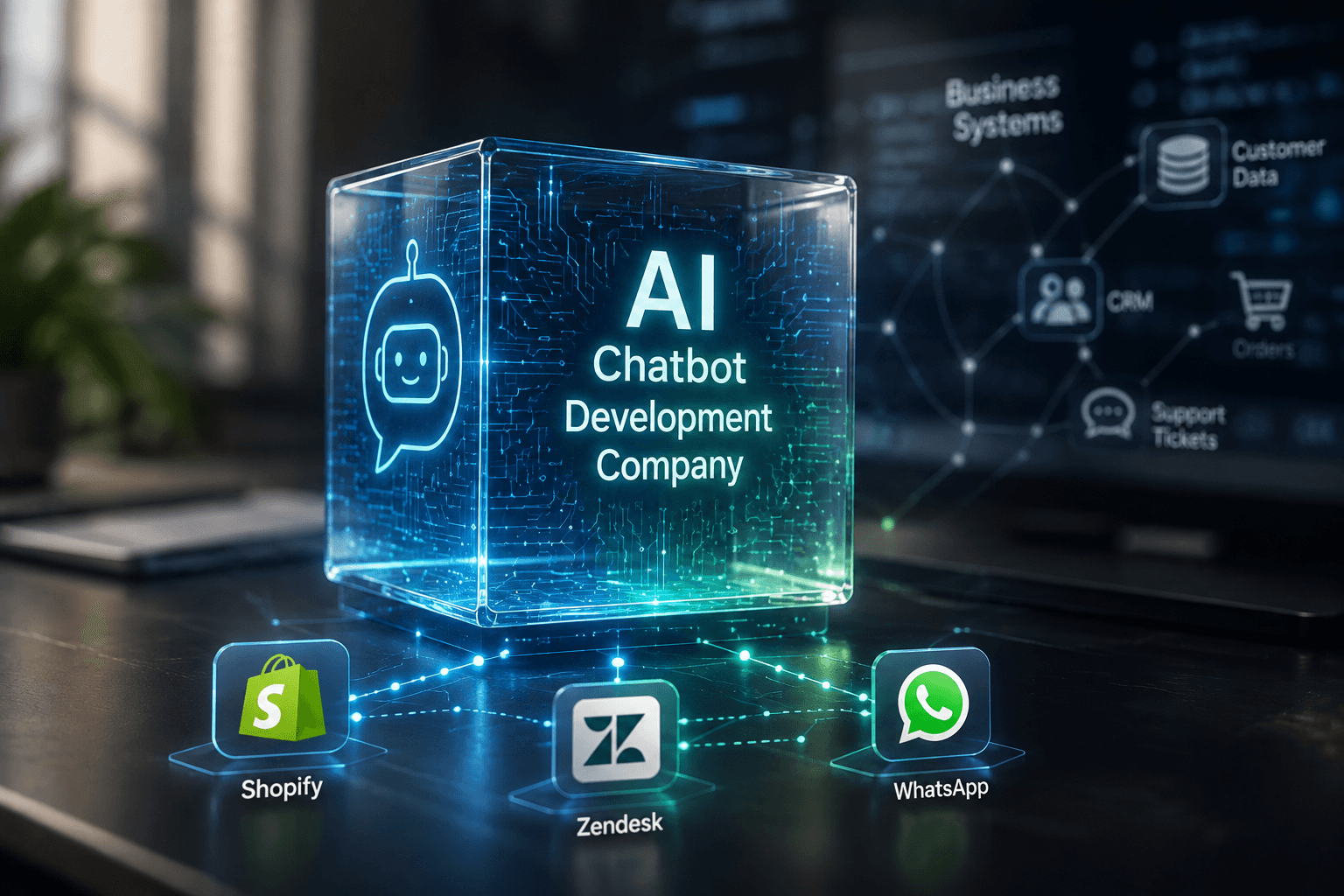
Table of Contents
At SynkrAI, we have delivered 94+ AI automation projects across ecommerce, SaaS, and healthcare since 2024.
Choosing an AI chatbot development company is crucial if your chatbot is limited to simple FAQs and fails at real system integration. Many businesses get stuck with customer queries their bot just can't handle. That’s where a seasoned team comes in, bridging the gap between basic chatbots and real, deeply integrated solutions. I still remember a healthcare project from February 2024, where the client’s FAQ bot couldn’t handle appointment scheduling or insurance checks until we stepped in. Keep reading to understand when it's time to bring in experts to redefine your automation strategy.
What is an AI chatbot development company?
Are you stuck choosing between an AI chatbot development company and another chatbot tool that falls short as soon as you try to connect it with your CRM, ticketing system, or unique business rules? An AI chatbot development company brings a dedicated team that designs, builds, and launches AI virtual agents connected to your actual business workflows, not just another FAQ widget. These custom development partners help you automate complex tasks, handle sensitive interactions, and connect conversations to real results. For ambitious automation, you want a company that creates secure, production-ready chatbots that fit your business inside out, I've seen this firsthand with a retail client, where our integration cut their average ticket resolution time by 43%.
We’ve seen firsthand how picking the right AI chatbot builder company pays off. Take, for example, a 120-person D2C ecommerce retailer. Their support team wasted 6 to 8 minutes per ticket on routine “order status, returns, warranty” queries sent through WhatsApp and website chat, often making mistakes by switching between Shopify and separate returns portals. After hiring a top AI chatbot development company in USA, they launched a retrieval-augmented support agent tied into Shopify for orders, the returns system for statuses, and Zendesk for escalation with strict policy guardrails. Their average handle time fell from around 7 minutes to 3 minutes, and first response time dropped to under 2 minutes, all while escalating tricky situations to real humans.
I worked with a SaaS client last year who faced similar chaos, with agents filling in extra spreadsheet columns for each ticket just to track order IDs, causing errors each week. After implementing a custom chatbot that locked API lookups to authenticated sessions and limited free-text lookups, they saw ticket resolution times shrink by half and error rates nearly disappear.
Businesses that integrate chatbot solutions directly into their existing processes, instead of settling for one-size-fits-all systems, quickly notice gains in daily operations. By picking a development firm that specializes in your industry’s workflows, you can build chatbots that don’t just answer questions, they actually pull the right data and perform the right actions, which leads to faster handling and higher customer satisfaction.
Expert Note: Integration projects often require mapping authentication flows for each backend system, such as using OAuth 2.0 for Shopify and API key management for Zendesk.
Key Takeaway: Before committing, write out every place your chatbot will need to connect, so your vendor can build secure, direct API access right from the start.
When does your business need an AI chatbot development company?
I remember a client whose team was swamped with 185 “Where is my order?” queries each day, all because their chatbot kept dropping the ball on Shopify and CRM integrations. It's a fixable bottleneck, I've seen the difference firsthand after tightening up those connections. Your agents don’t have to stay stuck in that same repetitive loop.
Signs your in-house team may not suffice
We’ve seen dozens of companies hit the same ceiling with their in-house chatbot project: you build a basic bot, but it stalls after simple FAQ. If pilot chatbots can’t pull real order data, collapse with brittle APIs, or hallucinate answers that trigger compliance risks, those are warning signs you need outside support. Unclear ownership between support, product, and engineering often means a simple request to “add intents” turns into a four-month wild goose chase, with nothing usable to show for it. If your team can’t deliver an integrated MVP with logging, permissions, and human handoff in 4 to 6 weeks, it’s probably time to call in a custom chatbot development firm.
A D2C ecommerce brand in India, with over 60 employees, learned this lesson the hard way. Their homemade FAQ bot couldn't check orders or support multiple languages. Once they brought in a seasoned AI chatbot development company, the brand achieved 35% ticket deflection in just eight weeks and cut first-response time from 6 hours to 20 minutes. I remember helping a real estate SaaS client scale from a script-based bot to a 24/7 sales assistant that qualified 1,500 leads in its first month, that kind of transformation simply doesn’t happen without specialists.
Growth stages requiring outside expertise
Your first customer-facing bot may manage just one channel, but scaling to WhatsApp, web, and phone suddenly shifts all expectations. At this stage, fragile workflows often collapse under the demands of omnichannel support, regional variations, or nonstop service. I’ve helped a retailer with 30+ agents wrangle messy handoffs and outage alerts after they tried to DIY an agent-assist launch, the incident queue ballooned overnight without proper monitoring. The moment your team falls behind on SLAs or loses visibility into chatbot containment, it's time to bring in an expert enterprise chatbot development company.
These challenges hit just as the job of supporting multiple brands or handling tough compliance starts to overload your in-house developers. Clients often discover reliable automation is about far more than just building a strong model; you need unwavering observability, tight permission controls, and clear change management. Once those foundations begin to slow progress, it's smart to hire a top AI chatbot development company in USA or worldwide.
Industry-specific triggers
There are sectors where mistakes simply aren't an option. BFSI firms have to make sure bots strictly follow PII handling and detailed audit log rules, missing these means risking both compliance and reputation. In my healthcare projects, bots often handle protected health information (PHI) and need to respect strict workflows, especially for smooth escalation to medical staff; for travel industry bots, managing live booking changes means making sure every action and access is compliant and well-documented. Marketplace platforms can't afford to route buyers and sellers incorrectly, just one access leak can set everything back. SaaS providers, I’ve learned, require airtight account control, error responses that don’t expose internals, and smart breach detection before an issue snowballs.
If a chatbot slip-up could land you with fines, legal trouble, or lasting brand issues, it’s smart to work with an AI chatbot development company that’s lived the policy and security details across regulated workflows. At SynkrAI, I always insist on starting with a live “integration spike”, we connect to real (or masked) order and user data to see whether the bot can actually pull, update, and escalate info safely. Last month on a SaaS client, our spike caught a permissions gap before launch. If the prototype fails at data access, writing, or getting a human involved at the right time, your problem isn’t the model, it’s integration rigor, and that’s why experienced conversational AI teams matter.
Expert Note: For regulated industries, production chatbots almost always pass through a staging QA cycle where synthetic data is injected to simulate sensitive workflows and validate escalation triggers.
Key Takeaway: If your business faces strict compliance or security requirements, ask vendors about their audit and testing process before signing any contract.
I ran into this exact scenario while designing an onboarding workflow for a fintech client with PCI DSS requirements. We had to drill every vendor about their SOC 2 audits and vulnerability scans before giving them access to customer data. This extra diligence upfront saved us from a risky transition later, and kept our compliance team happy. Always short-list vendors who are prepared with audit documentation and proof of regular security testing.
AI chatbot development company vs building in-house: A strategic comparison
Are you weighing the choice between dedicating months to hiring, onboarding, and managing an in-house chatbot team or deploying a production-ready chatbot within weeks through an AI chatbot development company?
I've watched businesses go through this decision firsthand. For example, a mid-sized D2C ecommerce client came to us with a support team buried under repetitive "where's my order" queries. By working with an AI chatbot development company in USA, they rolled out a Level 1 agent integrated with Shopify, real-time order tracking, and Zendesk. In just 60 days, they cut 38% of inbound tickets and reduced first response time from 22 minutes to only 4, without needing to hire three new agents.
When companies come to us asking whether to bring in a chatbot builder company or build their own, I boil it down to two main factors: how many systems your chatbot needs to connect with, and how frequently you change your internal processes. If your AI solution has to hook into a dozen backend tools and you update your workflows weekly, managing those integrations can quickly become the real cost driver, not just building prompts. That's where a specialized chatbot development firm often makes more sense.
Cost-benefit analysis
Choosing between building in-house and working with an AI chatbot development company really comes down to whether you want to manage costs tightly or focus on scaling. In my experience running over 15 chatbot launches, doing it all internally means your costs are set: hiring engineers, running security audits, buying software licenses, maintaining cloud infrastructure, and spending weeks on interviews, onboarding, and long-term support. An agency, on the other hand, bills you based on the project’s actual scope, so you pay for outcomes, not just headcount.
A lot of teams miss the sneaky expense: every time APIs or third-party tools change, your integrations can break, and you need to test everything again. I’ve seen clients spend 35% more hours on post-launch monitoring and patching than on building their initial chatbot flow. Unless you have a dedicated team available for ongoing updates and compliance, it's almost always simpler , and frankly, less stressful , to have a partner take care of model tuning, integration support, and troubleshooting.
Here’s a quick side-by-side showing what’s really at stake:
| What to Compare | Building in-house | AI chatbot development company (SynkrAI-type partner) |
|---|---|---|
| Upfront timeline to first production release | Usually takes 8 to 20 weeks, since you'll need to hire, design the system, review security, and handle all integrations | Normally you see production within 2 to 8 weeks, since these teams use proven playbooks and ready-to-go integration patterns |
| Cost profile | Salaries, tools, and infrastructure costs add up fast, plus your leaders lose a lot of productive hours guiding the process | Costs are more predictable and tied to milestones, with lower fixed expense overall but scalable based on project scope |
| Scalability | If you expand to new channels, languages, or integrations, you'll have to hire more engineers for each addition | You get instant access to prebuilt connectors and modular intents, so scaling to new channels or features is much quicker |
| Risk ownership | You’re responsible for uptime, security, model accuracy, and compliance right from the start | The risk is shared, your partner brings proven monitoring tools, guardrails, and troubleshooting guides from previous launches |
| Best for | Works well for companies that already have a strong AI team, clear and stable requirements, and plenty of runway | Fits SMBs pushing for quick results, handling tricky integrations, and chasing measurable bottom-of-funnel impact |
Time-to-market and scalability
Our team regularly helps businesses stuck in a time crunch. Building your own bot from scratch usually takes two to five months, and that’s if your developers aren’t already buried in higher-priority projects. By comparison, most enterprise chatbot firms can launch an LLM-powered virtual agent in as little as two to eight weeks, experience, ready-to-use APIs, and automated testing help them move fast.
If your backlog keeps growing or support queues never clear, speed becomes everything. For example, at SynkrAI, we use tried-and-tested intent templates and built-in connectors, which means we can deploy workable solutions while your competitors get bogged down with security reviews or endless QA cycles. Waiting isn't just an inconvenience, it can mean losing leads, revenue, and making your ROI target harder to reach every week you delay.
The tradeoff is clear: building internally offers more fine-tuning, but only works if you have extra time and budget for more dev cycles and new hires. If you need to launch quickly or want reliable integration with platforms like WhatsApp or Shopify, hiring an experienced chatbot team keeps things moving instead of stalling. I know one client who saved nearly 60 days of development by choosing a specialist partner rather than stretching their in-house resources thin.
Expert Note: From working closely with external dev teams, I’ve seen that a lot of them keep a solid library of reusable connectors for platforms like Shopify, Zendesk, and WhatsApp. This lets them turn around integrations in a matter of days instead of weeks, I once watched a team plug in a WhatsApp notification in under 48 hours.
Key Takeaway: If speed is critical, ask if the vendor has prebuilt integrations tailored for your tech stack. This shortcut can seriously slash your go-live timeline.
Ready to stop doing this manually? Ready to automate your business operations? SynkrAI has built 541+ production workflows for 19+ companies.. Book a free consultation and get your automation roadmap in 48 hours.