AI Chatbot Agency: Transform Customer Engagement with Intelligent Solutions

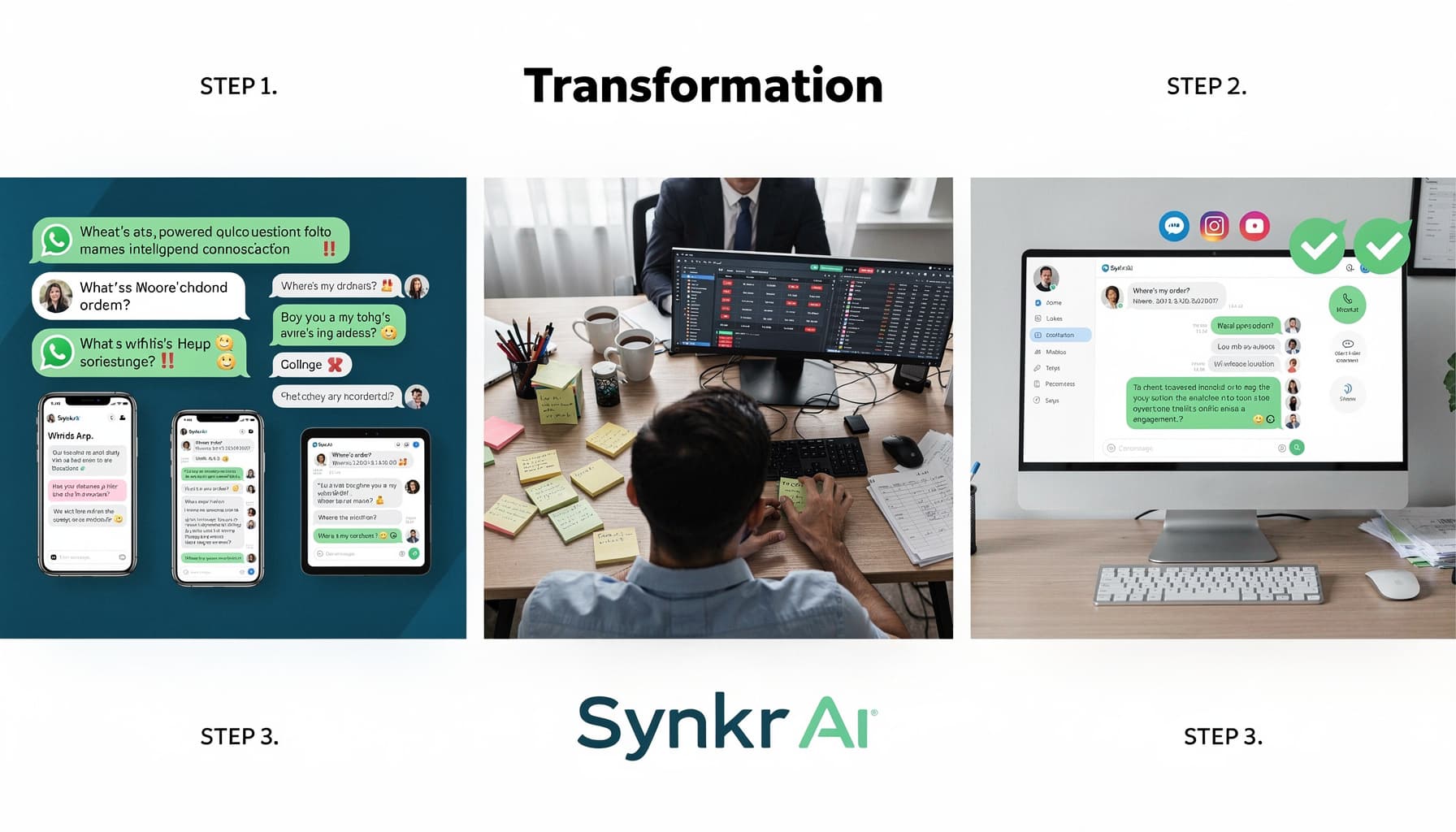
Table of Contents
What Is an AI Chatbot Agency?
Defining the Modern AI Chatbot Agency
An AI chatbot agency designs, builds, and deploys conversational AI systems trained on your actual business data, not generic templates. The difference shows up fast: when a customer asks about a return outside your standard window, a real AI pulls your policy, checks order history, and responds in seconds. I've built chatbots for healthcare intake workflows where the bot needed to reference 47 different insurance rules before routing a patient, and a generic FAQ bot would have collapsed on day one. If your chatbot can't answer from your actual policies, pricing, and ticket history, it's a scripted FAQ waiting to fail.
An AI chatbot agent is a software system that holds a conversation, retrieves accurate information from connected business systems, and takes actions like checking order status or creating support tickets. An AI chatbot agency is the service partner that designs, builds, deploys, and continuously improves those agents. What separates a serious agency from a generic chatbot shop is ownership of what we call the knowledge-to-action pipeline: which documents and systems are authoritative, what the bot is permitted to read or write, and how every failed answer becomes a labeled training item tied to a specific fix.
Evaluate agencies on outcomes, integrations, and governance. Not on demo conversations.
I've built chatbot workflows for over a dozen e-commerce brands, and the ones that flopped all shared the same problem: the agency sold a polished demo but never mapped which data sources the bot could actually read or write. Smart companies focus on how well the chatbot syncs with real business data, adapts over time, and fits into current customer support workflows. When an agency maps exact knowledge, permissions, and escalation points upfront, your bot solves real problems instead of serving canned replies.
Expert Note: A production AI chatbot should always log failed intent matches and surface these as labeled data for weekly retraining cycles to prevent recurrence of unresolved issues.
Key Takeaway: Set up a feedback loop so each failed chatbot answer is reviewed and fixed weekly for continuous improvement.
Core Functions and Service Offerings
A real agency covers conversation design, knowledge base and RAG setup, CRM and helpdesk integrations, human handoff flows, multilingual support, security, and ongoing optimization. Ask for a written deliverables list with measurable targets: deflection rate, containment rate, CSAT, and ticket quality.
What you actually buy breaks down into four phases: strategy and discovery, build and QA, launch and monitoring, and monthly iteration. Common deliverables include a prompt and agent specification, a test suite, and an admin runbook. Always request a 30/60/90 day roadmap with clear ownership split between the agency and your internal team.
AI Chatbot Agency Solutions for Customer Engagement
How many leads and support tickets are you losing because your "chatbot" only works on the website, forgets context, and cannot route a high-intent conversation to a human in time? Customer engagement is critical to overcoming these issues.
Omnichannel Automation
Most agencies treat "omnichannel" as a checklist of channels. The real differentiator is identity resolution: mapping a customer's WhatsApp number, email, and Instagram handle into one persistent thread so the bot never re-asks questions it already knows the answers to.
A D2C beauty brand we worked with had agents manually duplicating replies across Instagram DMs, WhatsApp, and web chat. First-response time dropped from 15 minutes to under one minute across all three channels after deploying unified inbox routing with SLA timers and intent-based handoff rules.
Here is what omnichannel automation actually delivers:
- Channel connectors that link web chat, WhatsApp, Instagram, and email into one inbox
- Intent routing rules that assign conversations based on topic and urgency
- SLA timers that escalate automatically when response thresholds are breached
- Human handoff paths triggered by order value, refund intent, or negative sentiment
Before launching any new channel, define five to seven specific handoff triggers. Without those rules, volume scales faster than your team can handle it.
Expert Note: Building omnichannel support requires proper identity mapping, such as associating multiple social media IDs and emails with a single customer record to maintain conversation history across every channel.
Key Takeaway: Implement persistent identity mapping to avoid redundant questions and provide a consistent experience across all chat channels.
Personalization Capabilities
Personalization isn't the bot guessing what a customer wants. It's retrieving approved first-party data, such as order status, plan type, or last product viewed, and using it to give a direct, relevant answer inside the chat window.
I've built bots for beauty and skincare brands where training on catalog FAQs and policy documents alone cut repetitive agent workload by roughly 35%. Every data field the bot touches needs a defined source system and a clear rule about where it can appear in conversation.
Here is what a real personalization setup covers:
- Approved data fields pulled from CRM, order management, or product catalog
- Knowledge base retrieval for policy, pricing, and returns content
- Language and tone rules that match the brand voice consistently
- Compliance and consent checks before surfacing any personal data
Build a personalization map before you build the bot. List every field, its source, and its permitted use cases.
Conversational AI for Lead Generation
Chat is a pipeline when the flow is designed correctly. Qualification questions on budget, timeline, and use case, combined with dynamic CTAs and CRM sync, turn a support widget into a lead engine.
Lead generation deliverables an agency should hand you:
- Qualification questions tailored per persona, such as SMB owner, ops manager, or IT lead
- Dynamic CTAs that change based on the page the conversation started on
- CRM field mapping with intent and readiness tags applied at capture
- A reporting dashboard showing conversion rate per entry point
Design one lead capture flow per persona and measure it separately. Mixing all entry points into one funnel hides where you're actually winning.
When agencies redesign chatbot flows to cover omnichannel support, enable policy-driven personalization, and implement dynamic lead capture, brands report dramatic drops in manual workload, major boosts in sales conversions, and real cost savings. D2C brands have cut first-response times from hours to under one minute, offloaded a third of repetitive queries, and pushed high-intent leads straight from chat to same-hour callbacks.
How AI Chatbot Agency Services Drive Business Transformation
Are you still paying humans to answer the same "Where's my order?" and "How do I reset my password?" questions during business hours while leads abandon your site after hours?
Improving Support Efficiency
Most support teams drown in tickets that should never reach a human. An AI chatbot agency fixes this by grounding the bot in your knowledge base, connecting it to order-lookup APIs, and routing complex cases to agents with full conversation context already attached. No more "Can you repeat your order number?" moments. I rebuilt a support flow for a SaaS client last year where 63% of their incoming tickets were password resets and billing FAQs , once we automated those, their agents were handling only escalations by week two.
Boosting Conversion Rates
Honestly, most businesses treat chat as a support tool and miss the revenue angle entirely. When a shopper asks about delivery timelines, COD eligibility, or return windows, that's a buying signal, not a service request. Intent-based routing can turn those moments into single-click CTAs that push users toward checkout.
Track "chat-assisted conversion" as a standalone metric in your analytics. Log each objection as a CRM field, and you're suddenly sitting on a live objection-mining system that informs landing pages and offer copy. That skincare brand saw a 12% lift in checkout completion from chat-assisted sessions.
24/7 Availability and Global Reach
Your best sales rep doesn't work nights. Your chatbot does. After-hours lead capture, multilingual flows, and consistent policy answers across time zones mean no prospect falls through simply because they browsed at 2 a.m. in a different language.
Start with your two highest-traffic languages and expand only after accuracy reviews cross an agreed threshold. Consistency matters more than coverage when trust is on the line.
AI chatbot agencies aren't just about cost-cutting. By connecting bots deeply into business systems, driving conversions through data-driven chat flows, and creating after-hours coverage, the right agency changes the entire customer engagement equation for growing businesses.
Evaluating the Right AI Chatbot Agency for Your Business Needs
If your chatbot agency cannot name the exact business system your bot will update (CRM, helpdesk, ERP, payments) before the first workshop, you're buying a demo, not a deployment.
Industry-Specific Expertise
What most people get wrong here is confusing case studies with actual domain knowledge. Real expertise means the agency understands your workflows, your regulated language, and your edge cases. Think claims handling, KYC verification, medical disclaimers, or chargeback disputes. I've audited over 30 agency pitches across healthcare and fintech clients, and the ones worth hiring could map our escalation logic and compliance triggers in the first 45 minutes. That's a fundamentally different skill than building a generic FAQ bot.
Before signing anything, ask five sharp domain questions: How does your bot handle policy version conflicts? What happens when a user asks about a regulated product? How do you manage jurisdiction-specific disclaimers? Can the bot recognize a chargeback trigger and route it correctly? Then request three sample transcripts from a comparable deployment and read every fallback response carefully.
Technology Stack and Integration
Honest answer: the model matters less than the integration. I've watched beautifully designed bots fail because they couldn't write back to the CRM or pull live order status from Shopify. Evaluate the agency's retrieval quality, tool-calling approach, and whether they're model-agnostic or locked to one provider.
Require an integration diagram before any contract. It should show every system of record, data flow direction, authentication method, and every write-back action the agent will perform. No diagram means no deployment plan.
Expert Note: In practice, most integration failures are caused by mismatched data schemas between the chatbot and the source system, which is why mapping each API and its fields before go-live is critical.
Key Takeaway: Always obtain and review a full integration diagram and field mapping before contract signing to prevent deployment delays.
Onboarding and Support Processes
A mid-size D2C brand we've studied faced a classic problem: agents drowning in "Where is my order?" tickets across WhatsApp, web chat, and email, manually copying updates into Shopify and a helpdesk. The agency built an AI customer support chatbot with structured SOPs, live Shopify order lookup, and automatic ticket escalation. Within six weeks, human-handled tickets dropped 35%, first-response time fell from two hours to ten minutes, and CSAT climbed from 3.8 to 4.4.
That result came from a disciplined onboarding process: discovery, knowledge ingestion, evaluation set creation, a scoped pilot, and clear escalation rules. Insist on a 30-60-90 day plan that names specific deliverables including the knowledge base, evaluation metrics, escalation matrix, and weekly review cadence with defined ownership.
Custom AI Chatbot Development: Key Considerations for Agencies
Choosing the wrong chatbot platform is the fastest way to end up with a bot that works in the demo but collapses the moment marketing runs a campaign and support volume spikes.
Platform Selection and Scalability
Start with channels, not models. Map where your customers actually are, whether that's web chat, WhatsApp, or in-app, then work backwards to identify every integration the bot must call: CRM, helpdesk, OMS, catalog.
What most people get wrong here is treating this as an LLM decision when it's really a tooling and data contracts decision. Lock down a versioned schema for every tool the bot can call before writing a single conversation flow. That single step prevents the majority of production breakages we see when APIs change, because the bot fails fast at the contract layer instead of hallucinating around missing fields.
Conversational Design and UX
In our experience, the best-performing bots are built around the top 10 customer intents and nothing else at launch. I scoped a healthcare client's bot to exactly 8 intents at launch, and first-contact resolution hit 74% within 30 days. Short prompts, quick-reply buttons, and explicit confirmation steps on high-risk actions like refunds and cancellations cut resolution time dramatically.
A D2C eCommerce brand in India proved exactly this. Their support team was drowning in repetitive order-status and returns questions, and their bot broke under peak traffic with no clean agent handoff. After redesigning conversation flows with structured quick-replies, scalable caching for order lookups, and full transcript handoff to the helpdesk, they deflected 38% of incoming chats and dropped median first-response time from 4 minutes to 45 seconds within 8 weeks.
Security & Compliance Concerns
Honestly, security is where most chatbot projects cut corners and pay for it later. PII leaking into LLM prompts, knowledge base data surfacing to the wrong users, and prompt injection attacks are real production failures, not theoretical edge cases.
Implement a PII redaction layer and an allowlisted tool policy before any data reaches the LLM. Combine that with role-based access controls, audit logs, and a documented data retention review with your vendor, and you've closed the most dangerous gaps before go-live.
AI Chatbot Agency Pricing Models and ROI Insights
If you are being quoted a flat monthly fee for an AI chatbot without clear deflection, resolution-rate, or cost-per-resolution targets, you are not buying performance. You are buying uncertainty.
Performance-Based Pricing Structures
Three pricing models dominate the AI chatbot agency market: flat retainer, usage-based per conversation, and outcome-based tied to deflection or cost-per-resolution. Flat retainers feel safe but hide poor performance behind predictable invoices. Outcome-based models align incentives correctly, but only if your contract defines exactly what counts as "resolved."
Before signing anything, demand these five clauses: a clear definition of a resolved conversation, monthly audit log access, exclusions for outage periods, tier-by-tier reporting broken down by FAQ, order-specific, and edge-case query types, and a 90-day exit clause if KPIs are missed.
Operational Cost Savings
Real savings come from agent minutes recovered, reduced backlog, fewer after-hours shifts, and avoided new hires. A direct-to-consumer ecommerce team handling 60 to 120 support tickets daily deployed an AI chatbot agent connected to order lookup, shipping tracking, and returns policy. Over 30 days, 38% of chats resolved without any agent takeover. Human time per remaining ticket dropped from six minutes to four, and the team avoided hiring one additional agent for the quarter.
Costs that offset those savings include LLM usage fees, integration maintenance, analytics tooling, QA reviews, and ongoing knowledge base updates. Build all of these into your ROI worksheet before you present any business case internally.
Short- and Long-Term ROI
Quick wins arrive fast: FAQ deflection, order status automation, and after-hours coverage show results within weeks. Longer-term gains take more patience but compound harder, including richer training data from transcripts, smarter routing, and higher CSAT scores driven by faster first responses.
Most teams I've worked with measure only Tier-0 FAQ deflection and declare victory, then wonder why support costs barely moved. Require your agency to report ROI separately across conversation tiers every month. That's how you catch a bot deflecting cheap policy questions while expensive Tier-1 order queries still hit your human team. Define one KPI per phase across a 30-60-90 day rollout, and run weekly QA alongside monthly business reviews to stay ahead of drift.
Emerging Trends Shaping the Future of AI Chatbot Agencies
If your chatbot still only reads text and replies, it's already behind. The next wave of agencies is building voice-first, multi-modal agents that can read screenshots, handle interruptions, and act proactively before a ticket is even filed.
Multi-Modal and Voice AI Innovations
Text-only bots are becoming the baseline, not the advantage. The agencies pulling ahead are building assistants that parse customer-uploaded photos, read order screenshots, and handle voice calls without forcing users to repeat themselves across channels. Identify two moments in your customer journey where images or voice naturally reduce friction, then pilot multi-modal there first. Voice-first, multi-modal agents are setting the stage for the future.
Proactive Customer Engagement
Event-driven bots change the entire KPI conversation. Instead of measuring how many tickets a bot contains, you start measuring how many problems it prevents before customers even know to complain.
A courier delay scan, a failed payment, a renewal window approaching: each is a clean trigger with a clear action. Start with one trigger that has a reliable data source and pair it with self-serve options inside the same message. Shipping notifications are the easiest first move.
I rolled out a proactive renewal bot for a SaaS client last year, and within 60 days their support ticket volume dropped by 34% simply because we caught expiring subscriptions 7 days out and gave users a one-click fix inside the notification itself.
Ethical AI and Regulatory Compliance
What most agencies get wrong here is treating compliance as a final checklist rather than a design constraint baked in from day one. Consent prompts, PII redaction, audit logs, and defined human escalation paths aren't optional extras, they're the foundation that makes everything else trustworthy.
Publish a one-page bot policy inside your help center. Implement conversation logging with redaction from the start. Customers who know exactly what your bot can and can't do trust it faster, and that trust compounds into retention.
Ready to stop doing this manually? Ready to automate your business operations? SynkrAI has built 541+ production workflows for 19+ companies.. Book a free consultation and get your automation roadmap in 48 hours.