Innovative Use Cases of Agentic AI Transforming Healthcare

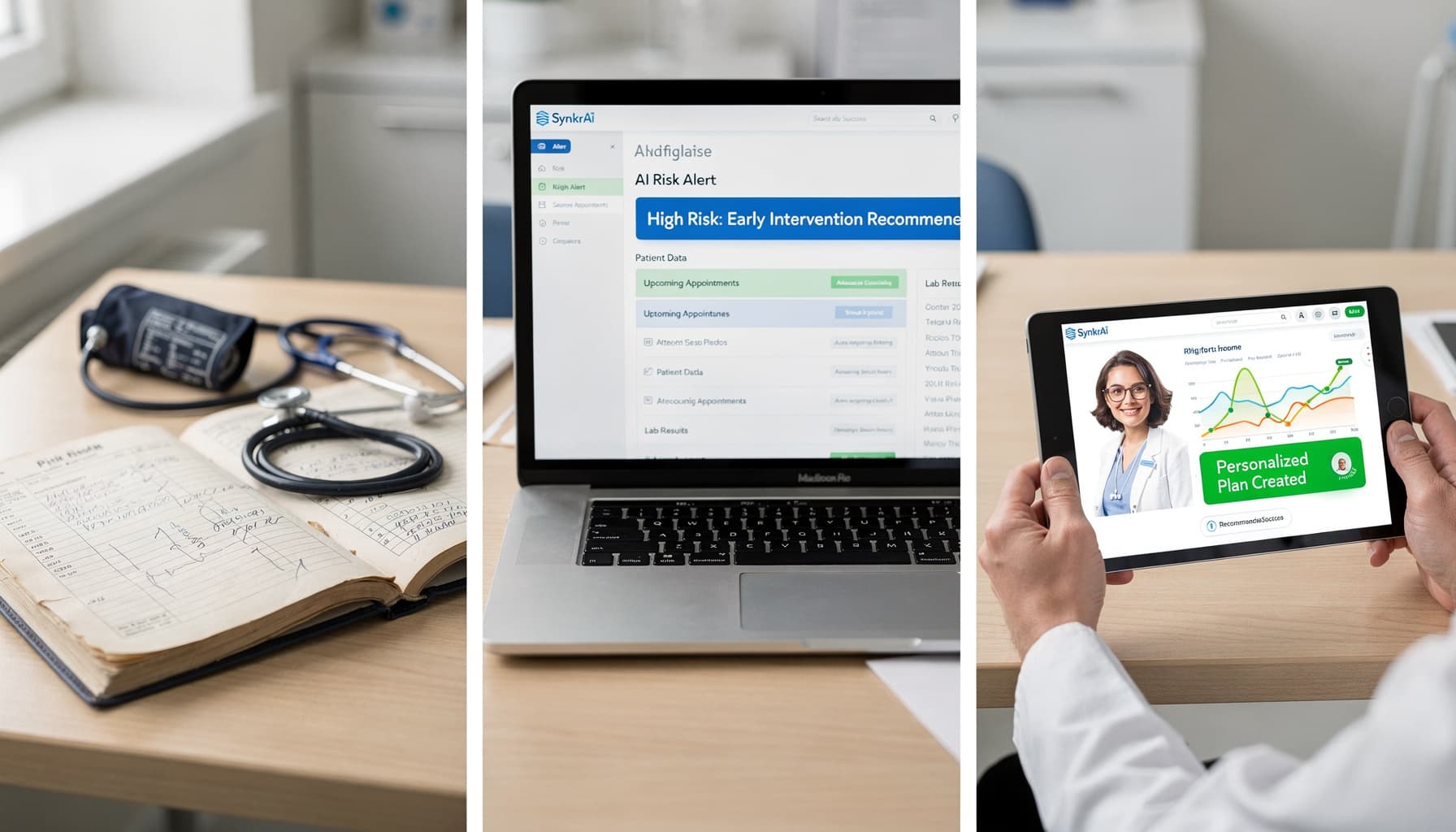
Table of Contents
Understanding Agentic AI and Its Role in Healthcare
Defining Agentic AI
Agentic AI, a subset of artificial intelligence (AI), refers to systems capable of autonomous decision-making and action-taking based on predetermined goals. Unlike traditional AI systems that follow pre-programmed instructions, agentic AI possesses a level of autonomy and proactivity in achieving objectives. In healthcare, agentic AI is harnessed to enhance the quality of patient care, optimize operational processes, and drive innovation across the industry.
Historical Context and Evolution in Healthcare
The integration of agentic AI into healthcare represents a significant milestone in the industry's technological evolution. Historically, AI in healthcare has been primarily used for data analysis, diagnostics, and treatment recommendations. However, the emergence of agentic AI has elevated these capabilities by enabling machines to act as autonomous agents in decision-making scenarios. This evolution has opened new frontiers in patient care, hospital management, and medical research, paving the way for a future where AI plays a central role in transforming the healthcare landscape.
Strategic Benefits of Agentic AI for Healthcare Institutions
Enhanced Patient Care
Agentic AI, with its advanced algorithms and deep learning capabilities, is revolutionizing patient care in the healthcare industry. By harnessing the power of AI technology, healthcare institutions can offer personalized and more effective treatment plans for patients. Agentic AI systems are designed to analyze vast amounts of patient data, including medical records, test results, and even genetic information, to provide accurate diagnoses and tailored treatment recommendations. This level of precision not only enhances the quality of care but also improves patient outcomes and satisfaction.
Furthermore, agentic AI can assist healthcare professionals in making data-driven decisions by highlighting potential risks, predicting disease progression, and recommending the most suitable interventions. This proactive approach to patient care helps in early detection of health issues and allows for timely and targeted interventions, ultimately leading to better health outcomes for patients.
Operational Efficiency and Cost Reduction
Another significant benefit of agentic AI for healthcare institutions is the optimization of operational processes and the reduction of costs. AI-powered systems can automate routine tasks such as appointment scheduling, medical documentation, and inventory management, allowing healthcare staff to focus more on patient care and complex medical cases.
Moreover, agentic AI enables predictive maintenance of medical equipment, which helps in preventing breakdowns and optimizing the utilization of resources. By predicting equipment failures in advance, hospitals can avoid costly downtimes and ensure the continuous delivery of care to patients.
Overall, the strategic implementation of agentic AI in healthcare institutions not only enhances patient care but also streamlines operations, reduces costs, and improves overall efficiency in the provision of healthcare services.
Top Use Cases of Agentic AI in Healthcare
Personalized Treatment Plans
Agentic AI in healthcare empowers medical professionals to create personalized treatment plans tailored to each patient's specific needs. By analyzing vast amounts of patient data, including medical history, genetic information, and real-time monitoring data, AI systems can identify the most effective treatment options for individuals. This level of personalization not only enhances patient outcomes but also contributes to a more efficient healthcare system by reducing trial-and-error approaches.
Predictive Diagnostics
One of the most impactful applications of agentic AI in healthcare is predictive diagnostics. AI algorithms can analyze complex data sets to predict diseases or health complications before they manifest clinically. By leveraging machine learning and data analytics, healthcare providers can identify patterns and risk factors that may go unnoticed with traditional diagnostic methods. Early detection enabled by predictive diagnostics can significantly improve patient prognosis and treatment effectiveness.
AI-driven Surgical Assistance
Agentic AI is transforming the field of surgery by providing real-time assistance and guidance to surgeons during procedures. From pre-surgical planning to intraoperative support, AI systems can enhance surgical precision, reduce errors, and optimize surgical workflows. Through image analysis, robotic control, and virtual simulations, AI-driven surgical assistance ensures better surgical outcomes and shorter recovery times for patients.
Virtual Health Agents
Virtual health agents powered by agentic AI are revolutionizing the way patients interact with the healthcare system. These AI-powered chatbots and virtual assistants can provide personalized medical advice, schedule appointments, send medication reminders, and answer healthcare-related queries. By offering 24/7 support and guidance, virtual health agents enhance patient engagement, improve access to care, and relieve the burden on healthcare providers.
Complex Data Management
In the era of big data, managing and deriving insights from vast amounts of healthcare data is a challenge. Agentic AI streamlines complex data management processes by automating data collection, analysis, and interpretation. AI algorithms can efficiently process electronic health records, medical imaging data, and clinical research data to facilitate evidence-based decision-making. By leveraging agentic AI for data management, healthcare organizations can unlock valuable insights, improve operational efficiency, and drive innovations in patient care.
Innovative Applications: Agentic AI Success Stories
Case Study: Robotics in Surgery
The integration of agentic AI in surgical robotics has marked a significant shift in the healthcare landscape. Surgical robots, backed by AI algorithms, are enhancing precision, reducing human error, and improving patient outcomes. One of the pioneering success stories in this domain is the da Vinci Surgical System. This robotic platform allows surgeons to perform minimally invasive procedures with unparalleled accuracy and control. By leveraging agentic AI, the system offers real-time feedback, assists in complex maneuvers, and enables remote surgery capabilities. As a result, patients experience reduced pain, shorter recovery times, and decreased complication rates.
Case Study: AI in Chronic Disease Management
Agentic AI is reshaping the management of chronic diseases by providing personalized and proactive care to patients. Through continuous monitoring and data analysis, AI-powered systems can detect subtle changes in health parameters, predict disease progression, and recommend timely interventions. An exemplary case is the utilization of AI in diabetes management. By analyzing lifestyle patterns, blood glucose levels, and other relevant data points, AI algorithms can offer tailored treatment plans, lifestyle recommendations, and early warnings of potential complications. This proactive approach not only improves patient outcomes but also reduces the burden on healthcare resources.
In conclusion, these success stories exemplify how agentic AI is revolutionizing healthcare by enabling cutting-edge solutions, improving patient care, and driving efficiency across various medical domains.
Challenges and Ethical Considerations in AI Adoption
Data Privacy Concerns
Agentic AI in healthcare brings about a plethora of benefits, but it also raises significant data privacy concerns. As these AI systems collect, analyze, and process massive amounts of sensitive patient data, ensuring the privacy and security of this information becomes paramount. The risk of data breaches, unauthorized access, or misuse of patient data underscores the importance of robust data protection measures.
Healthcare organizations adopting agentic AI must adhere to stringent data privacy regulations such as HIPAA (Health Insurance Portability and Accountability Act) to safeguard patient information. Implementing encryption protocols, secure network connections, access controls, and regular audits are essential steps in mitigating data privacy risks associated with AI adoption in healthcare.
Ensuring Algorithmic Fairness
Algorithmic bias poses a significant challenge in the adoption of agentic AI in healthcare. Biased algorithms can perpetuate existing disparities in healthcare outcomes, leading to unequal treatment based on factors such as race, gender, or socioeconomic status. Ensuring algorithmic fairness involves actively identifying and eliminating biases in AI models to provide equitable and unbiased healthcare services to all patients.
Healthcare organizations must prioritize diversity and inclusivity in dataset selection, model training, and algorithm testing to mitigate bias in agentic AI applications. Regular auditing of AI algorithms, transparency in decision-making processes, and diversification of development teams can help address issues of algorithmic fairness in healthcare AI systems.
Overcoming Implementation Hurdles
The implementation of agentic AI in healthcare is not without its challenges. Healthcare providers may face obstacles such as resource constraints, lack of technical expertise, resistance to change, and interoperability issues when integrating AI technologies into existing workflows. Overcoming these implementation hurdles requires a strategic approach that involves stakeholder engagement, training programs, and comprehensive change management strategies.
Healthcare organizations investing in agentic AI technologies must prioritize employee training and upskilling to ensure seamless integration and adoption of AI systems. Collaborating with AI vendors, leveraging industry best practices, and establishing clear governance policies can help overcome implementation hurdles and maximize the benefits of AI in healthcare delivery.
Getting Started with Agentic AI in Your Healthcare Practice
Artificial Intelligence (AI) is quickly revolutionizing the healthcare industry by providing innovative solutions to streamline operations, enhance patient care, and improve overall efficiency. Getting started with agentic AI in your healthcare practice involves a strategic approach to assess readiness, identify suitable AI solutions, and seamlessly integrate AI technologies with existing systems.
Assessing Organizational Readiness
Before implementing agentic AI in your healthcare practice, it is crucial to assess the organization's readiness to adopt this technology. This assessment involves evaluating various aspects such as:
-
Infrastructure: Determine if your current infrastructure can support AI integration. Assess the compatibility of your systems with AI technologies and identify any necessary upgrades.
-
Data Accessibility: Evaluate the availability and quality of data within your organization. AI systems rely heavily on data for insights and decision-making, so ensuring access to relevant and accurate data is essential.
-
Staff Training: Assess the skill level of your staff in handling AI technologies. Providing adequate training programs to familiarize employees with AI systems can significantly impact the success of implementation.
-
Regulatory Compliance: Understand the regulatory requirements and compliance standards related to AI implementation in healthcare. Ensure that your organization meets all legal and ethical standards.
Identifying Suitable AI Solutions
Once you have assessed your organization's readiness, the next step is to identify suitable agentic AI solutions that align with your healthcare practice's goals and objectives. Consider the following factors when choosing AI solutions:
-
Specific Use Cases: Identify the areas within your practice where AI can have the most significant impact. Whether it is in patient diagnosis and treatment, hospital workflow efficiency, remote healthcare monitoring, or medical data analysis, choose AI solutions that cater to your specific use cases.
-
Scalability: Select AI solutions that are scalable and can grow with your practice. Consider the future expansion of your AI initiatives and choose technologies that can adapt to increasing demands.
-
Integration Capabilities: Look for AI solutions that seamlessly integrate with your existing systems and workflows. Compatibility with your current infrastructure is key to ensuring a smooth implementation process.
Integrating AI with Existing Systems
One of the critical aspects of adopting agentic AI in healthcare is the integration of AI technologies with your existing systems. Integration should be planned meticulously to ensure a seamless transition and optimal performance. Consider the following strategies for successful integration:
-
Collaboration with IT Teams: Work closely with your IT teams to develop a clear integration plan. Establish communication channels to address any technical challenges that may arise during the integration process.
-
Testing and Optimization: Conduct thorough testing of AI systems before full implementation. Optimize the performance of AI technologies to ensure they deliver accurate results and insights.
-
Continuous Monitoring: Implement monitoring mechanisms to track the performance of AI systems post-implementation. Regularly assess the effectiveness of AI solutions and make necessary adjustments to enhance efficiency.
By following these steps to assess readiness, identify suitable solutions, and integrate AI technologies effectively, your healthcare practice can leverage the power of agentic AI to enhance patient care, optimize operations, and drive innovation in the healthcare industry.
The Future of Agentic AI in Healthcare: Trends and Predictions
Emerging Technologies and Innovations
The realm of agentic AI in healthcare is continually evolving, paving the way for exciting innovations and cutting-edge technologies that have the potential to reshape the industry. One of the key trends on the horizon is the integration of Internet of Medical Things (IoMT) with agentic AI systems. This amalgamation allows for real-time data collection from various medical devices, offering healthcare providers valuable insights and enabling proactive patient care.
Moreover, the rise of personalized medicine facilitated by agentic AI is set to revolutionize treatment approaches. By leveraging patient-specific data, AI algorithms can tailor treatment plans to individual needs, optimizing outcomes and minimizing adverse effects. This personalization extends beyond treatment to encompass preventive care, empowering individuals to take charge of their health through customized wellness strategies.
Another burgeoning trend is the adoption of virtual health assistants powered by agentic AI. These virtual companions can offer round-the-clock support to patients, assisting with medication reminders, symptom tracking, and even emotional well-being checks. By fostering constant connectivity and support, these AI-driven assistants enhance patient engagement and compliance with treatment regimens, ultimately leading to improved health outcomes.
Long-term Impacts on Healthcare Delivery
Looking ahead, the long-term impacts of agentic AI on healthcare delivery are poised to be profound. As these technologies become more sophisticated, healthcare providers are likely to witness significant improvements in efficiency and accuracy across various operational facets. From streamlining administrative tasks and optimizing resource allocation to reducing diagnostic errors and enhancing treatment precision, agentic AI stands to revolutionize the way healthcare services are delivered.
Furthermore, the scalability of agentic AI solutions offers promise for extending quality healthcare services to underserved populations globally. By bridging gaps in access to healthcare through remote monitoring, telemedicine, and AI-powered diagnostics, agentic AI has the potential to democratize healthcare delivery, ensuring that individuals worldwide receive equitable and timely medical care.
In conclusion, the future of agentic AI in healthcare is characterized by a convergence of groundbreaking technologies, personalized care approaches, and heightened efficiency in healthcare delivery. By embracing these trends and innovations, the healthcare industry is poised to enter a new era of patient-centric, data-driven, and accessible care, catalyzed by the transformative power of agentic AI.